The 2026 AIA Women’s Leadership Summit brought together founders, principals, emerging professionals, and students who arrived curious and left with sharper ambitions.
Leadership can’t wait
AIA 2026 President Illya Azaroff, FAIA, opened the summit with the two phrases that have defined his year: “leadership can’t wait” and “be the change.” He reminded the room that women have held five of the past six AIA presidencies, and he challenged every attendee to hold the door open for whoever comes next.
Marathon swimmer Diana Nyad followed with the story of her 53-hour swim from Cuba to Florida at age 64. Her refrain stayed with me all week: give every effort so completely that you “couldn’t have done it a fingernail better.” Architects play a long game, and Nyad reminded us that endurance always depends on a team.
Why do you do what you do?
The emotional center of the summit arrived on the second morning, when 2026 AIA President-elect Yiselle Santos Rivera sat down with Vivian Lee, FAIA, design director and principal at Gensler and recipient of the 2026 Edward C. Kemper Award, AIA’s highest service honor. Yiselle will become the first Latina to lead AIA when she takes office as 2027 president, and she guided the conversation with the warmth and candor that make her one of the profession’s most trusted voices.
Vivian speaks four languages and calculates that she can converse with roughly a third of the people on Earth. She treats difference as an opening line. As a girl, she heard herself called mandona, Spanish for bossy; today she reads the same trait as the confidence to see potential in others. Yiselle shared that Vivian’s encouragement after the 2017 summit persuaded her to keep producing WIELD (Women Inspiring Emerging Leaders in Design), the storytelling event she founded. WIELD ran for seven years and earned AIA diversity recognition.
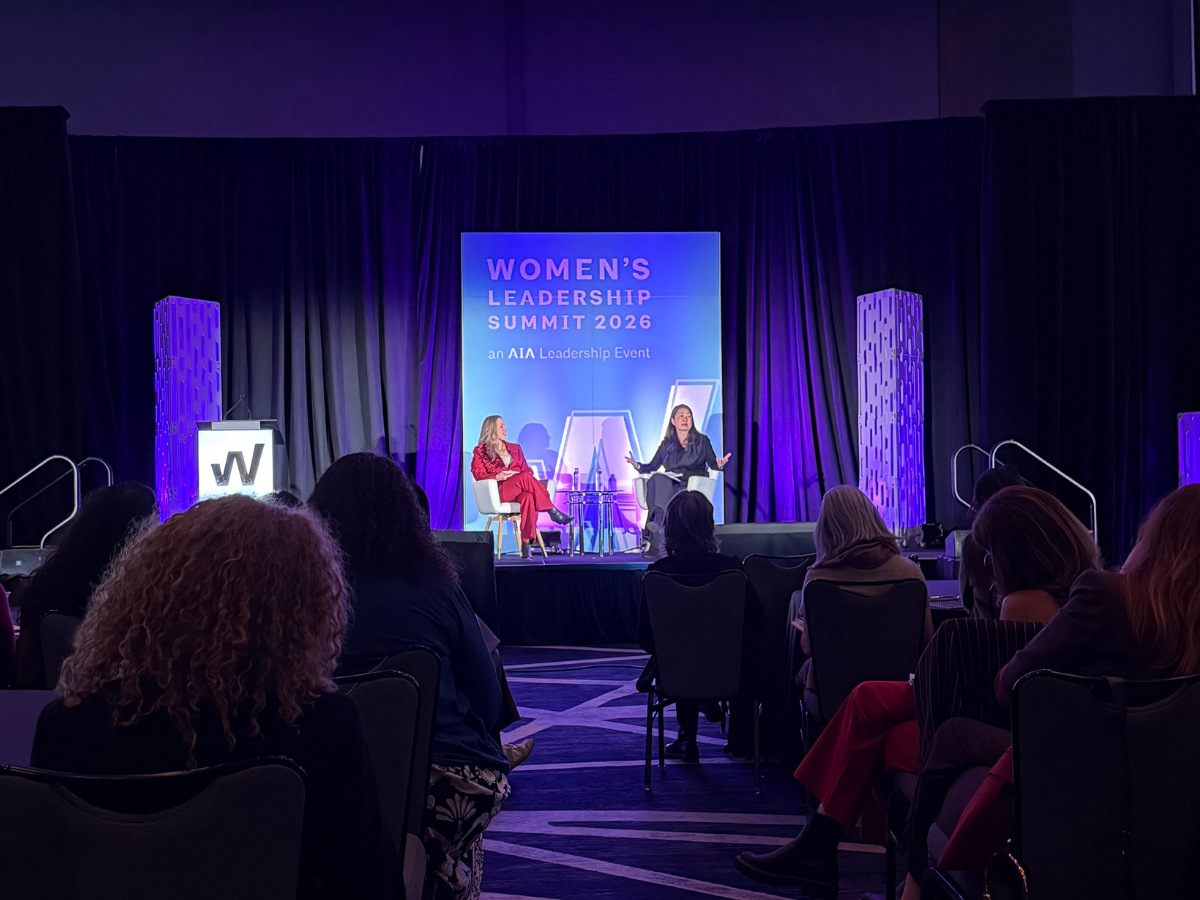
Vivian begins every proposal, mentee meeting, and award submission with one question: why do you do what you do? Then she handed the audience a pencil exercise I plan to borrow. Write the first adjective that comes to mind when you see yourself in the mirror. Add four more. Strike them one at a time until a single word remains; that word names your strongest identity. Finally, weave all five into a statement of 35 words or fewer that describes your impact. Yiselle volunteered on the spot and arrived at “Puerto Rican” as the word she could not release. She also noted that AIA asks for the same 35-word impact statement in Fellowship and award applications, so the exercise doubles as preparation for recognition.
Vivian closed with a definition of leadership she first heard from Susan Colantuono at the 2017 summit and still repeats almost daily:
“Leadership is using the greatness in you to achieve and sustain extraordinary outcomes by engaging the greatness in others.” Susan Colantuono
From service provider to trusted advisor
Yiselle then moderated a panel on influence and innovation with Vivian; Jen Grosso, AIA, director of architecture at Alloy; Julie Sayers, principal at Encompass and mayor of Lenexa, Kansas; and Niknaz Aftahi, founder and CEO of aec+tech and co-chair of the AIA Artificial Intelligence Task Force. Every panelist offered something a firm could act on Monday morning.
Let values write the brief. When a utility warned Alloy in 2019 that it could not guarantee gas service, Jen’s team asked what a tower without gas would look like. The answer became New York City’s first all-electric tower and a precedent for every developer who followed.
Field the unexpected voice. Julie urged firms to look beyond their most senior people when they build interview teams. Clients often connect with an intern or a subject-matter expert, and in her experience that person is frequently a woman.
Write the AI policy. Niknaz previewed AIA survey findings due out this month: about 75 percent of firms now use or explore AI, roughly a quarter have a strategy, and fewer than 10 percent have a written policy. The new AIA AI Toolkit helps firms of any size assess readiness and manage risks such as data privacy, hallucination, and professional liability.
Keep the human advantage. Vivian uses AI to polish her writing, and Yiselle records her presentations and asks AI how she could connect better. Both agreed that discernment, context, and empathy remain ours to supply.
Run for office. Speaking on Election Day, Julie traced her path from interior designer to mayor and asked every architect in the room to consider a city council or school board seat. Coalition building, persuasive presentation, and the search for common ground already sit in our toolkit.
Retire impostor syndrome. Julie cited Reshma Saujani’s 2023 commencement address at Smith College, which compares the term to “bicycle face,” a fake Victorian diagnosis that doctors invented to keep women off bicycles. Her advice: get on the bike and pedal. Niknaz added a simpler instruction: take the risk.
Yiselle closed the panel with advice I wrote down twice. Fail hard, fail fast, and stay aligned with your values. People watch leaders, she said, because they hope to see themselves.
Your firm is a design problem
BNIM brought the same rigor to a session on practice transformation. Working with Je’Nen Chastain of Apostrophe Consulting, the Kansas City firm treated its own organization as a design problem and replaced a linear hierarchy with a distributed leadership model organized around the work itself. Every employee owner now carries a share of business development, and a 27-person Practice Council meets quarterly to move ideas forward. One attendee named a frustration many mid-career women share: firms withhold the title until you prove you can do the job, then withhold the chance to prove it. BNIM’s response resonated with me. Define what people own, and let them lead before the title arrives.
Your Voice Is Your Brand
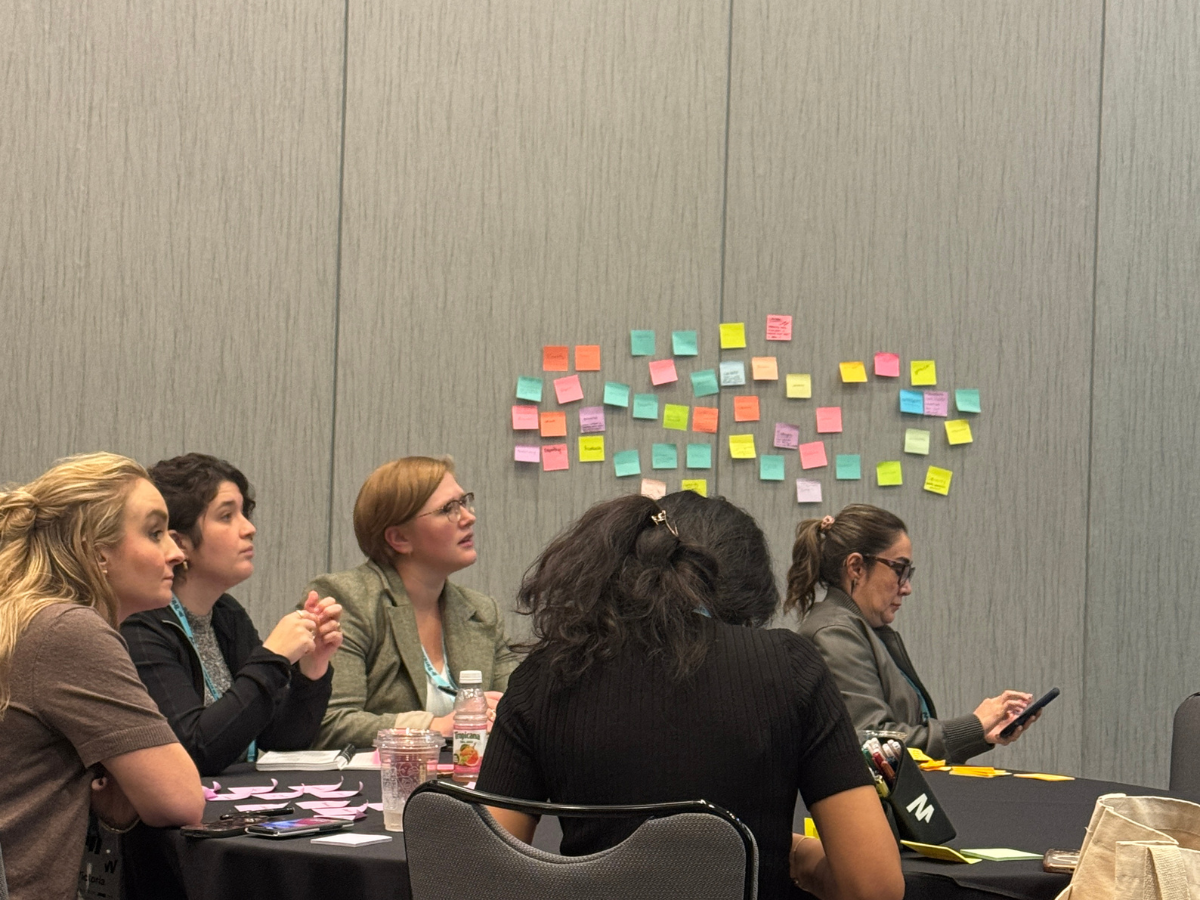
I founded The Raygency to amplify the voices of architects, and particularly women architects. For too long, our profession celebrated a narrow set of names and faces while brilliant women remained invisible. So I felt the weight of the moment when I looked out at the room during Your Voice Is Your Brand, the workshop I led, and saw so many women ready to claim their stories.
To every woman who joined me: thank you. You brought candor and generosity to every exercise, and you asked the questions that make a workshop worth leading. Vivian’s mirror exercise and Yiselle’s reminder that people watch leaders to see themselves both point to the truth we explored together:
Your voice already holds your brand. Our shared work is to make it audible, consistent, and impossible to overlook.
Sho-Ping Chin, FAIA, the late Payette principal whose Women Principals Group gave rise to WLS, imagined a gathering where women would build the networks they need to thrive. Kansas City proved that her vision still works.